Evaluating Easy Sudoku for Kids 100: What This KDP Interior Pack Offers and How It Compares to Other Puzzle Resources
Finding ready-to-use puzzle interiors for a children's activity book project takes time and attention to detail. The Easy Sudoku for Kids 100 pack enters the conversation as a specific type of resource—a compact set of 10 puzzles with matching solutions, formatted for Amazon KDP upload and physical printing at 8.5 x 11 inches. Rather than positioning itself as a massive puzzle library, this pack focuses on accessibility and immediate usability, which makes it worth examining alongside other options parents, educators, and low-content book creators might be weighing.
What follows is a practical look at what the pack actually contains, where it fits in the broader landscape of children's puzzle materials, and the tradeoffs to consider depending on your goals. Whether you are assembling a KDP interior for commercial use or simply looking for beginner-friendly sudoku sheets to print at home, understanding the distinctions can help you avoid mismatched expectations.
What the Easy Sudoku for Kids 100 Pack Actually Contains
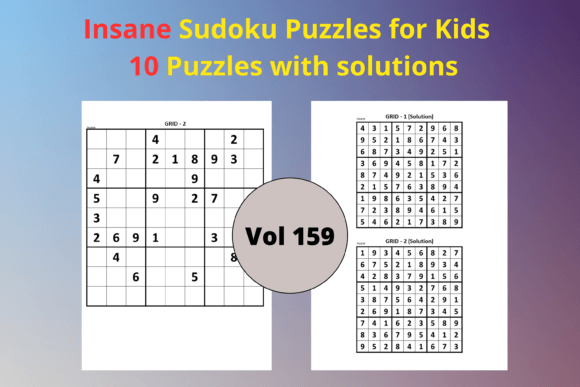
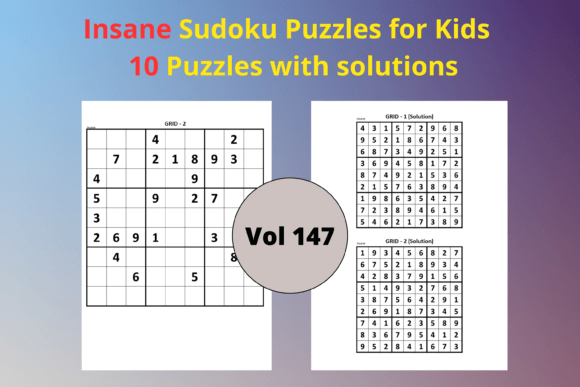
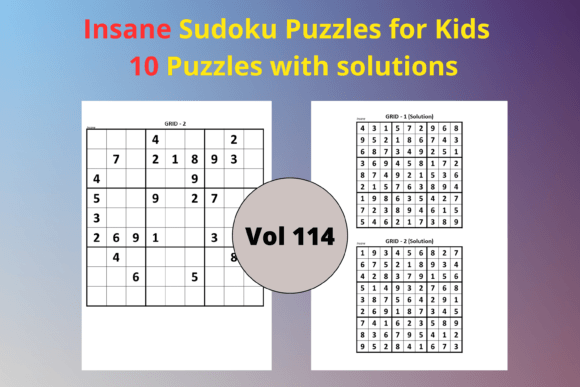
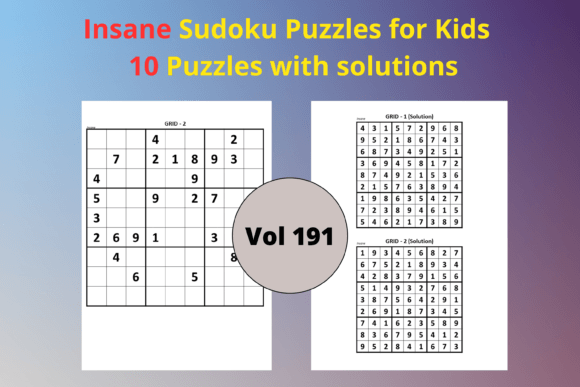
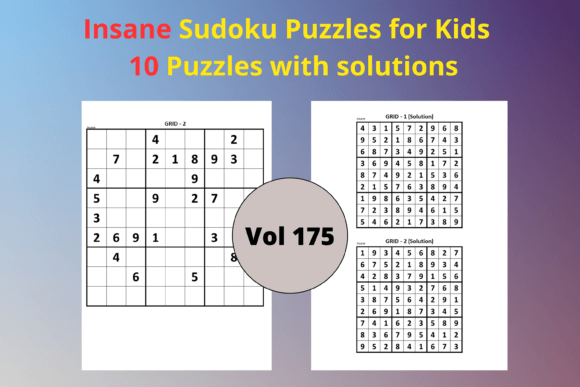
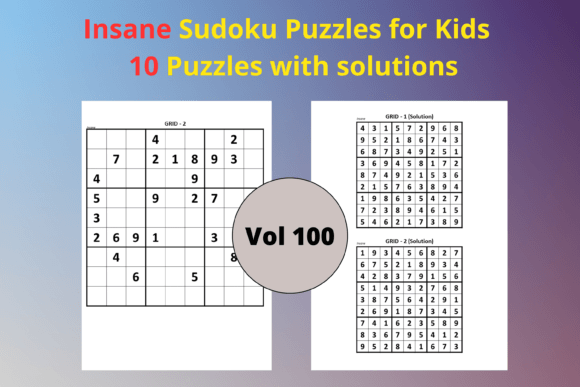
Despite the "100" in its name, this particular pack includes 10 unique 9x9 sudoku puzzles and 10 corresponding solution pages. The puzzles are designed at an easy difficulty level, making them suitable for children who are new to sudoku or still building confidence with logical reasoning. The deliverables include both a print-ready PDF file and an editable PPTX file, sized to the standard 8.5 x 11-inch trim that KDP favors for paperback interiors.
This format aligns with a specific use case: someone who needs a small batch of puzzles quickly, without the overhead of creating layouts from scratch or verifying puzzle integrity across dozens of pages. The inclusion of an editable PPTX file gives users the ability to adjust fonts, add branding, or modify the visual presentation before finalizing the PDF. For a parent making a personalized activity book or a teacher preparing a classroom handout, that flexibility can be meaningful. However, anyone expecting a collection of 100 puzzles will need to recalibrate—the "100" appears to be part of the product branding rather than the puzzle count.
Comparing Compact Puzzle Sets to Larger Puzzle Collections
When evaluating Easy Sudoku for Kids 100, one of the first decision points involves size. A 10-puzzle set sits at one end of a spectrum that stretches into 50-, 100-, and even 200-puzzle volumes. Each approach carries its own logic depending on the intended application.
Compact Sets (10–25 Puzzles)
Smaller sets like this one work well for sampling, testing, or short-term use. If you are experimenting with a KDP niche and want to validate interest without investing in a large-format book, a 10-puzzle interior keeps the page count low and the production timeline fast. Similarly, a teacher running a one-week logic unit or a camp counselor filling a single rainy afternoon might find 10 puzzles to be exactly the right volume—not overwhelming, not too sparse.
The tradeoff is obvious: repeat customers or daily-use scenarios will exhaust 10 puzzles quickly. If a child solves one puzzle per day, the content is depleted in under two weeks. For a book intended to last a month or more, a compact set feels undersized unless supplemented with other activities.
Larger Collections (50–200 Puzzles)
On the other end, expansive puzzle books offer longevity and a sense of value through volume. A 100-puzzle book, for example, can sustain a child's daily practice for over three months. From a KDP perspective, higher page counts can support slightly higher price points and may reduce return rates if buyers perceive the content as substantial.
However, larger collections demand more rigorous quality control. Puzzle uniqueness, consistent difficulty grading, and error-free solution pages become harder to maintain across 100 or more grids. Additionally, the editing and layout work scales up significantly, which matters if you are purchasing an interior and still need to verify every page before publishing.
Editable Formats: PPTX Flexibility Versus PDF-Only Resources
One feature that distinguishes Easy Sudoku for Kids 100 from many competing KDP interiors is the dual delivery of PDF and PPTX files. Most puzzle interiors on the market ship as PDF-only, which limits customization to annotation tools or paid PDF editors. Receiving an editable PowerPoint file opens up a different workflow.
With PPTX, you can adjust font choices, reposition elements, insert instructions or a title page, or adapt the interior to match a specific series design. This is particularly useful if you maintain a consistent visual brand across multiple activity books and need every interior to follow the same typography and spacing conventions. It also lets you remove or reorder pages before generating the final print-ready PDF, which can streamline the revision process.
The limitation of PPTX is that it may not preserve complex vector elements or gradients reliably, and heavy font dependencies might cause rendering shifts on different systems. Users comfortable with basic PowerPoint editing will generally find the experience straightforward, but those expecting InDesign-level layout control may still need to invest in additional design software for deeper customization.
Difficulty Level and Age Suitability in Context
The puzzles in this pack are labeled as easy and built on a standard 9x9 grid. This places them in the beginner-to-intermediate range for kids, generally appropriate for ages 6 to 10 depending on the child's prior exposure to logic puzzles. The 9x9 grid is the classic sudoku format, making the skills transferable to harder puzzles later on.
Compared to 4x4 or 6x6 grids often marketed for very young children, the 9x9 format introduces full regional constraints (rows, columns, and 3x3 boxes), which require a more systematic approach to solving. This makes the pack better suited for children who have moved past pattern-filling activities and are ready for structured deduction. If a child is under six or has never encountered sudoku before, starting with smaller grid variants might build confidence before transitioning to the 9x9 size.
At the easy difficulty level, a 9x9 puzzle typically leaves 30 to 40 given numbers visible at the start, providing enough clues to avoid guessing. This keeps frustration low while still requiring logical steps. For parents evaluating puzzle difficulty from product images, checking the number of pre-filled cells on a sample page can serve as a rough quality indicator.
KDP-Specific Considerations for Puzzle Interiors
Anyone purchasing Easy Sudoku for Kids 100 for commercial publishing purposes should be aware of several KDP-specific factors that affect the final product experience.
Print bleed and margins matter. The 8.5 x 11-inch trim size is standard, but verifying that the interior PDF includes appropriate margins—especially if the printer trims slightly differently—can prevent puzzle grids from being cropped too close to the edge. A quick review of the PDF in preview mode before upload is always advisable.
Solution page placement affects user experience. Some puzzle books place solutions immediately after each puzzle, while others group all solutions at the back. The approach taken in this pack influences how the book flows, and with the editable PPTX file, rearranging the solution order is possible if the default layout does not match your preference.
Interior uniqueness is another consideration for KDP publishers. If the same puzzle set appears in multiple books from different sellers, customer reviews may eventually flag the duplication. While this risk exists with any mass-distributed interior, running a reverse image search on a puzzle page or checking sample previews across similar listings can offer some due diligence.
Practical Use Cases: Who Benefits Most from This Pack
Different buyers approach puzzle resources with different intentions. Here is how Easy Sudoku for Kids 100 maps onto several common scenarios.
First-time KDP publishers testing the children's activity book market may appreciate the low-commitment entry point. Ten puzzles provide enough content to create a legitimate listing without the complexity of managing a 100-page interior. The dual file formats reduce the barrier to making design adjustments after purchase.
Parents creating personalized activity bundles for road trips, quiet time, or homeschooling can use the editable file to combine sudoku pages with other printables—coloring sheets, mazes, or word searches—into a single custom booklet. The 10-puzzle count fits neatly into a multi-activity compilation without dominating the entire collection.
Teachers and tutors who need a controlled number of reproducible sheets for a short unit will find the scope manageable. Because learners at the easy level can typically complete one puzzle in 5 to 15 minutes, ten puzzles cover roughly one to two hours of activity time, which aligns with a focused workshop or weekly homework assignment.
Daycare providers and after-school programs with rotating groups of children may prefer larger puzzle sets or reusable laminated sheets. In those environments, 10 puzzles can be consumed very quickly across multiple children, and the per-sheet cost or reprinting effort may make a higher-volume resource more economical over time.
Strengths, Limitations, and Honest Tradeoffs
No resource fits every situation perfectly, and the decision to use Easy Sudoku for Kids 100 benefits from weighing both advantages and constraints side by side.
On the strengths side, the pack offers immediate usability. The files are ready to upload or print as soon as they are downloaded, and the editable PPTX provides a layer of creative control not always included with KDP interiors. The 8.5 x 11-inch size avoids formatting headaches that sometimes arise with non-standard trim dimensions. For the specific purpose of delivering 10 clean, easy-level 9x9 sudoku puzzles with solutions, the pack fulfills its promise without unnecessary filler.
On the limitations side, the quantity may disappoint buyers who interpret the "100" in the product name as a puzzle count rather than a brand identifier. The easy difficulty level, while appropriate for beginners, may not satisfy children who already solve easy puzzles quickly and need a progression into moderate or challenging territory. The pack also does not include variant sudoku types—such as picture sudoku, irregular regions, or 6x6 grids—that some parents and educators look for when introducing logic puzzles to younger audiences.
How to Assess Whether a Puzzle Pack Matches Your Needs
When comparing Easy Sudoku for Kids 100 against other options, several assessment questions can clarify the fit before committing to a purchase or download.
- What is the intended lifespan of the content? A 10-puzzle set suits short-term use; a 100-puzzle collection supports ongoing practice.
- Do you need editable files? If design customization matters, the PPTX inclusion adds value. If you plan to upload the PDF as-is, a PDF-only resource at a lower price point might serve equally well.
- What is the target age and skill level? The 9x9 easy format assumes basic familiarity with number placement and logic. For absolute beginners, a 4x4 or 6x6 introduction might be a more appropriate starting point.
- Are solutions presented in a usable format? Check whether solution pages display the completed grid clearly and whether the layout matches the puzzle page orientation for easy comparison.
- Does the trim size match your publication plan? 8.5 x 11 inches is widely compatible, but if you plan a square or A4 format, you may need to resize, which adds a step to the workflow.
The Role of Compact Interiors in a Crowded Puzzle Market
The broader market for children's puzzle interiors has expanded significantly as KDP activity books have grown in popularity. Within that space, compact packs like Easy Sudoku for Kids 100 occupy a specific niche: they serve the buyer who values speed, simplicity, and editability over sheer volume. This contrasts with large puzzle bundles marketed primarily on quantity, and with professionally designed books where the interior is part of a fully wrapped product including cover design and category research.
For someone building their first activity book, a small interior pack reduces risk. If the market response is lukewarm, the upfront investment and sunk time remain modest. If the book performs well, the publisher gains insights that can guide the next purchase—perhaps a larger set, a different difficulty level, or additional puzzle types to vary the product line.
This incremental approach aligns with how many successful KDP publishers actually operate: test, learn, iterate, and expand based on real data rather than upfront assumptions. A 10-puzzle pack supports that philosophy by lowering the cost of experimentation.
Final Decision Factors
Choosing a puzzle interior ultimately comes down to the alignment between what a pack offers and what your specific project demands. Easy Sudoku for Kids 100 delivers a well-defined, modestly sized product that prioritizes ease of use and customization. The editable PPTX file sets it apart from many PDF-only alternatives, and the easy difficulty level targets a clear audience: children early in their sudoku journey.
If your project needs dozens or hundreds of puzzles, or if you require varied grid types and difficulty curves, a more extensive resource would be the natural direction. But if you need ten clean, editable, print-ready sudoku pages with solutions—and you understand that "100" is part of the branding rather than the count—this pack represents a focused option in a market full of alternatives with different strengths and compromises.