Easy Sudoku for Kids 156: A Practical Puzzle Pack for Young Minds and Busy Creators
Finding activity materials that genuinely hold a child's attention without requiring constant adult intervention is a quiet victory for any parent, teacher, or content creator. Easy Sudoku for Kids 156 enters that space as a straightforward, no-fuss collection of ten 9x9 Sudoku puzzles designed specifically for children. It is not a sprawling curriculum or an app with endless notifications. It is a focused, printable pack that delivers exactly what it promises: ten entry-level puzzles and ten matching solution pages, formatted for standard 8.5 x 11-inch paper and ready to drop into a project or print at the kitchen table. For anyone building educational printables, assembling activity books for KDP, or simply looking for screen-free mental exercise for a young learner, this pack deserves a closer look.
What Exactly Does This Puzzle Pack Contain
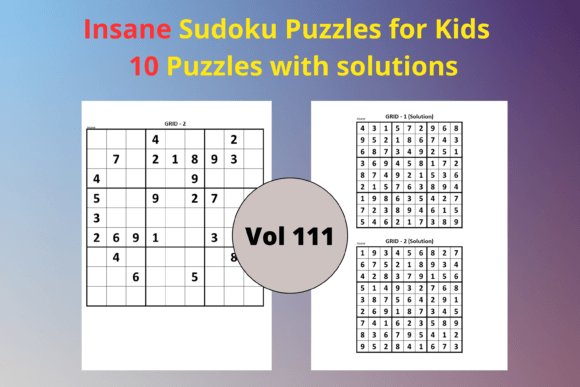
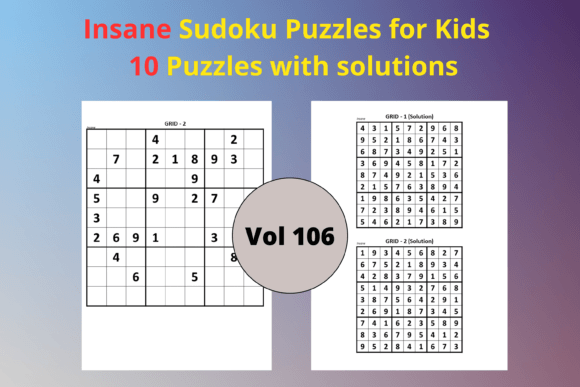
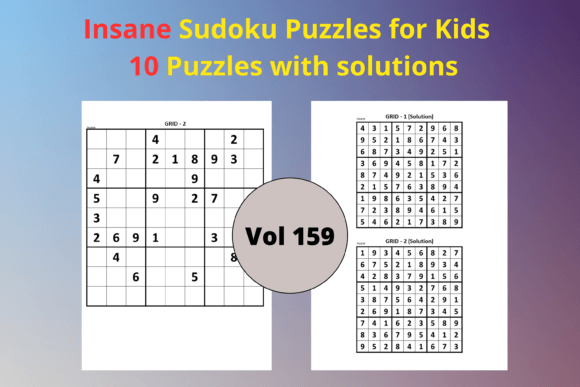
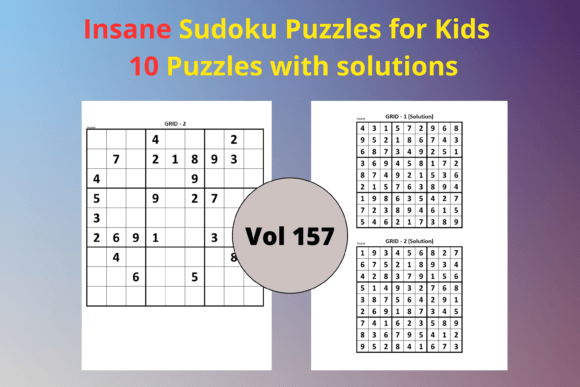
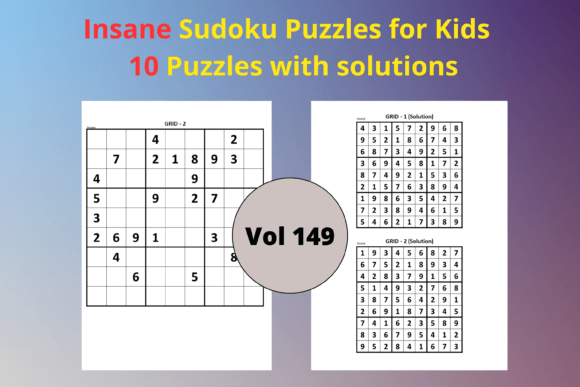
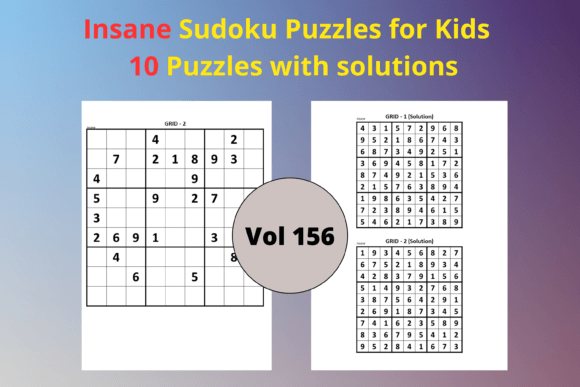
At its core, Easy Sudoku for Kids 156 is a set of twenty pages. Ten of those pages hold individual 9x9 Sudoku grids at an easy difficulty level. The remaining ten pages provide the completed solutions, clearly laid out so a child or supervising adult can quickly verify answers without squinting or second-guessing. The format is intentionally minimal. Grids are large enough for small hands to write in, numbers are legible, and the layout avoids visual clutter that might distract or overwhelm a beginner solver. The product ships as both a ready-to-upload PDF and an editable PPTX file, which immediately broadens its utility beyond simple print-and-play use.
The "156" in the title serves as a product identifier rather than a puzzle count, which is useful to clarify upfront. Buyers expecting 156 individual puzzles may misunderstand the offering. The pack contains ten puzzles and ten solutions. For a child working through them at a relaxed pace, that could span a week of casual puzzling or a single focused afternoon. For a publisher assembling a larger compilation, ten puzzles represent a solid building block rather than the entire structure.
Why a Dedicated Easy Sudoku Pack for Kids Matters
Standard Sudoku books often skew toward adult audiences, with dense grids, tiny cells, and difficulty curves that climb steeply after the first few pages. Children encountering Sudoku for the first time need a gentler ramp. Grids must be physically accommodating. The logic should be solvable with basic scanning techniques rather than advanced strategies like X-wings or swordfish patterns. An easy 9x9 grid for a child typically means more given numbers, patterns that resolve through simple elimination, and a sense of achievable progress within a reasonable timeframe.
Easy Sudoku for Kids 156 addresses this by targeting the entry-level solver. The puzzles are labeled as easy, and based on the structure of similar packs, the given numbers are generous enough that a child can complete a grid in ten to fifteen minutes with minimal frustration. This pacing matters. A puzzle that drags on too long risks losing a young solver's interest. One that resolves too quickly feels trivial. The sweet spot for kids' Sudoku is a short, satisfying arc from "I'm not sure" to "I did it," and that arc is what a well-calibrated easy pack aims to deliver repeatedly.
Unpacking the Editable Format Advantage
One of the more practical features of this product is the inclusion of an editable PPTX file alongside the PDF. For a parent printing puzzles for home use, the PDF is the obvious go-to. For a teacher customizing worksheets, a blogger creating a freebie for subscribers, or a KDP publisher inserting puzzles into a larger activity book, the editable format changes the equation. You can adjust fonts, resize grids, add branding, insert instructions in your own voice, or combine these puzzles with coloring pages, mazes, or word searches to create a cohesive product.
This flexibility means Easy Sudoku for Kids 156 functions less like a finished product and more like a raw ingredient. A KDP seller could take the ten puzzles, add twenty more from another source, wrap them in a themed cover, and publish a complete Sudoku book under their own brand. A teacher could pluck individual puzzles from the PPTX, drop them into a weekly packet, and print exactly what the class needs without wrestling with PDF page extraction. The editable format respects the reality that most buyers are not passive consumers but active creators adapting resources to specific contexts.
Quality and Presentation in Print and on Screen
Evaluating the print readiness of any KDP interior means looking at margins, resolution, and whether the content sits comfortably within the trim area. The pack is sized at 8.5 x 11 inches, the most common letter size for printables in North America and widely accepted by print-on-demand platforms. The PDF should translate cleanly to both home inkjet printers and commercial printing setups. What users want to avoid are faint grid lines that disappear during printing or numbers that bleed into neighboring cells. The best KDP puzzle interiors use crisp vector lines and high-contrast numerals, and that standard is what reasonable buyers will expect here.
Solutions pages are sometimes an afterthought in puzzle packs, crammed into tiny grids at the back of a book. A practical strength of having one solution per page is readability. A child checking their own work — or a tired parent verifying four puzzles in a row — benefits from instant visual confirmation. No hunting across a crowded page. No squinting. The design choice to give solutions their own dedicated space signals an understanding of how these materials are actually used in real homes and classrooms.
Who Benefits Most from This Puzzle Pack
The audience for Easy Sudoku for Kids 156 breaks into several distinct groups, each with different needs and expectations.
Parents and caregivers seeking offline activities will find value in a printed stack of puzzles that requires no setup beyond grabbing a pencil. Road trips, waiting rooms, rainy afternoons, and quiet time all become slightly easier to manage with a few sheets of engaging logic puzzles on hand. The easy difficulty means most children aged six to nine can attempt them independently, though younger kids with strong number recognition may also succeed with some initial guidance.
Elementary teachers and homeschool educators can integrate the puzzles into math centers, early finisher folders, or logic units. Sudoku builds skills that transfer across subjects: pattern recognition, sequential reasoning, and the persistence to work through a problem methodically. A teacher who laminates the grids can reuse them with dry-erase markers across multiple classes, stretching the value of a single purchase considerably.
KDP publishers and printables sellers represent perhaps the most commercially motivated segment of the audience. For them, Easy Sudoku for Kids 156 is a time-saving asset. Creating ten clean Sudoku grids from scratch, with solutions, formatted correctly for print, takes hours — time that could be spent on cover design, marketing, or expanding a product line. The editable PPTX allows for customization without starting from zero. Publishers can modify, rebrand, and bundle the content into activity books, puzzle collections, or seasonal workbooks sold on Amazon or Etsy.
Freelance designers and content creators building lead magnets or newsletter freebies also stand to benefit. A simple Sudoku printable makes an effective opt-in incentive for parenting blogs, tutoring services, or educational platforms. Having a ready-made, editable file shortens the path from idea to published freebie.
Realistic Use Cases and Practical Limitations
A pack of ten puzzles occupies a specific niche. It is not a substitute for a 200-page Sudoku book, nor does it claim to be. For a parent buying directly, ten puzzles might fill a week of casual use or a single long car ride before the child exhausts the content. The longevity of the pack depends entirely on the user's context. A teacher printing for a class of twenty needs two copies per puzzle, and suddenly ten puzzles don't stretch as far. Understanding this upfront prevents disappointment.
For publishers, ten puzzles are a starting point. A standalone KDP book containing only ten Sudoku puzzles would likely feel thin and receive poor customer reception. The pack works better as one component within a larger compilation — paired with word searches, coloring pages, dot-to-dots, or additional Sudoku puzzles from other sources. Think of it as a module, not a finished product.
The editable format, while powerful, also requires some technical comfort. Opening a PPTX file and making meaningful edits presumes basic familiarity with PowerPoint or Google Slides. Users who expect to modify the file on a tablet without a proper office suite may encounter friction. This is a minor barrier, but worth noting for non-technical buyers who plan to customize the content extensively.
How Easy Sudoku for Kids 156 Fits a Content Strategy
From a content creation and publishing perspective, puzzle interiors like this one serve a clear strategic purpose. They reduce production time on commodity content — the kind of content customers expect to find in an activity book but that doesn't differentiate the book on its own. The differentiation comes from how the puzzles are packaged, themed, and marketed. A publisher might take Easy Sudoku for Kids 156, add a dinosaur theme, sprinkle in some dino facts and coloring pages, and publish "Dinosaur Sudoku Adventures for Kids." The Sudoku grids remain the same, but the surrounding content creates a distinct, marketable product.
This approach aligns with how successful low-content and medium-content publishers operate. They assemble high-quality, ready-made components into cohesive, themed books that appeal to specific buyer personas. The editable nature of the PPTX file supports this workflow efficiently, allowing publishers to maintain visual consistency across pages from different sources.
Evaluating Long-Term Value and Reusability
A digital asset's true value reveals itself over time. A printable puzzle pack that gets used once and forgotten is a minor expense. One that can be reprinted, repurposed, and recombined over months or years justifies its cost many times over. Easy Sudoku for Kids 156 leans toward the latter camp primarily because of its editable format and the timeless nature of Sudoku puzzles. Unlike trendy activity types that may feel dated in a few years, Sudoku has remained a staple of puzzle sections and activity books for decades. An easy kids' Sudoku created today will still work five years from now.
For publishers, the asset can feed multiple projects across different niches. The same ten puzzles could appear in a general kids' activity book, a unicorn-themed puzzle collection, a Christmas stocking stuffer book, and a summer vacation workbook — each time dressed in different packaging and targeting a different audience. This kind of reuse is standard practice in low-content publishing and represents the asset's hidden, compounding value.
Comparisons and Alternatives Worth Considering
Anyone shopping for kids' Sudoku interiors will encounter a range of options. Some packs offer fifty or a hundred puzzles for a slightly higher price point. Others bundle Sudoku with crossword puzzles, word searches, and mazes in a single download. Choosing between them depends on the end goal.
A larger puzzle pack makes more sense for someone building a dedicated Sudoku book from scratch. A bundled activity pack suits a publisher who wants variety without sourcing multiple products. Easy Sudoku for Kids 156 occupies the middle — enough puzzles to be useful immediately, editable enough to combine with other assets, and specifically calibrated for young beginners. If the project requires only easy-level 9x9 grids and values editability over volume, this pack is a direct fit. If volume is the primary metric, larger packs exist and should be considered instead.
Practical Recommendations for Getting the Most Out of This Pack
For parents and teachers, printing on slightly heavier paper prevents show-through from the reverse side, especially if the child presses hard with a pencil. Keeping a few copies in a folder or binder means puzzles are always accessible without reprinting. Consider introducing Sudoku with a brief demonstration using a smaller 4x4 grid first if the child has never encountered the puzzle type before, then graduate to the 9x9 grids in this pack.
For publishers and content creators, opening the PPTX file and immediately saving a master copy prevents accidental overwrites during editing. When inserting puzzles into a larger document, check that the final page size matches the working file's dimensions to avoid scaling issues during print. If you plan to use the puzzles across multiple products, maintaining a clean, unedited source file streamlines future projects.
For sellers on platforms like Amazon KDP, remember that interior content is only one piece of the puzzle. A strong cover, clear title, relevant keywords, and thoughtful categorization often matter more for discoverability than the specific Sudoku grids inside. Use the time saved by starting with a ready-made interior to invest in those visible, market-facing elements.
What Makes a Puzzle Pack Worth Recommending
After examining the components, format, audience fit, and use cases, Easy Sudoku for Kids 156 earns its place as a practical, unpretentious resource. It does not overpromise. Ten puzzles and ten solutions, clearly presented, in two file formats — that is the deal, and for the right user, it is a genuinely good one. The editable PPTX elevates the pack above a simple printable, transforming it into a flexible asset rather than a single-use download. The easy difficulty calibration respects the developmental stage of young solvers, giving them puzzles they can finish and feel proud about.
The primary limitation is volume. Ten puzzles, while useful, are a finite resource. Buyers should go in with clear eyes about that number. But for the price point typical of such packs, the expectation aligns with what is delivered. When a product does what it claims, in a format that adapts to the user's needs rather than demanding the user adapt to it, that product has a legitimate argument for attention in a crowded marketplace of educational and creative digital goods.