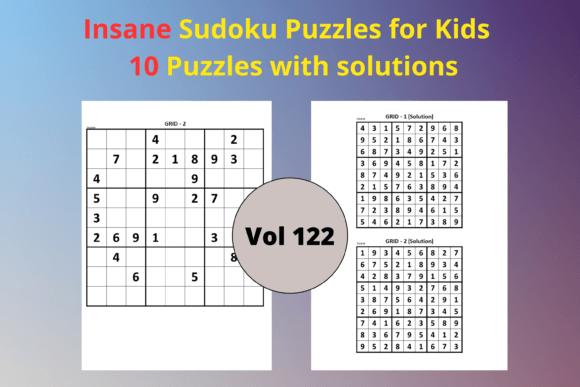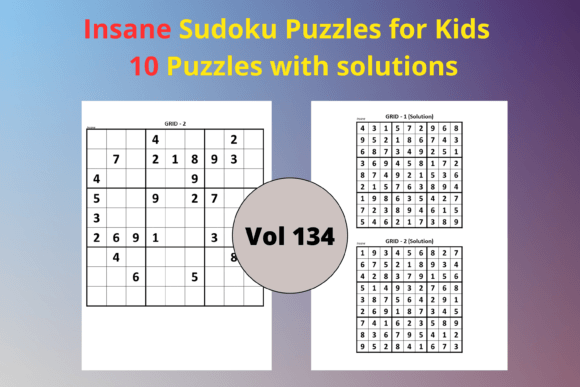
Easy Sudoku for Kids 134: Fun Puzzles & Ready-to-Use KDP Interior
Finding reliable, print-ready activity pages for a children's book or classroom resource often means hours of formatting, double-checking puzzles, and worrying about layout. The Easy Sudoku for Kids 134 pack takes that entire checklist and turns it into a single download. It delivers 10 complete 9×9 Sudoku puzzles with solutions, all set to an easy difficulty level. The file set includes both a ready-to-upload PDF and an editable PPTX file, sized at a standard 8.5 x 11 inches. For creators, parents, and educators who want a clean, no-hassle way to introduce logic games to children, this collection solves more than puzzles — it removes the friction of getting a usable product into someone’s hands.
Why an Easy 9×9 Sudoku Works So Well for Young Solvers
Sudoku for kids often gets simplified to 4×4 grids or picture-based variations. While those have their place, many children between ages 6 and 10 are ready for a traditional 9×9 grid when the logic stays gentle. The Easy Sudoku for Kids 134 pack uses that sweet spot: full-sized grids that still feel approachable. Each puzzle gives enough filled-in cells so that a child can spot patterns without guessing. This builds a specific kind of confidence — the kind that comes from completing a grown-up-looking puzzle independently.
Beyond the smile factor, this design supports focused thinking. Working through an easy 9×9 helps a child practice scanning rows, columns, and 3×3 blocks methodically. It’s a soft introduction to systematic problem-solving. Parents and teachers often notice that after a few puzzles, children start verbalizing their thought process: “There’s already a four in this row, so that blank must be a six.” That shift from random guessing to logical deduction is the real prize hidden inside the grid.
What Makes This KDP Interior Different from a Standard Puzzle Download
Many puzzle collections online offer a PDF, but not all of them are built with the publishing process in mind. The Easy Sudoku for Kids 134 pack is specifically designed as a KDP interior, which means practical decisions have already been made for you. The 8.5 x 11 inch trim size is the most common format for low- and medium-content books on Amazon. Margins, spacing, and puzzle placement take into account typical bleed and binding requirements, so you don’t lose puzzle cells in the gutter.
Another quiet advantage is that you receive both a static PDF and an editable PPTX file. The PDF is ready to upload directly — no need to convert or resize. The PPTX gives you complete design control. You can add page numbers, a cute border, a tracking page for stickers, or even a personalized “This Book Belongs To” page. For a creator who wants to build a branded series, that editable file becomes a template. You can later swap puzzles, adjust difficulty labels, or add instructions, all without starting from a blank document.
How the 10-Puzzle Pack Fills a Need for Short, Satisfying Activity Books
Not every book needs 100 puzzles. Sometimes a smaller collection performs better because it matches a specific use case. Parents preparing a travel activity folder, teachers assembling a weekly challenge packet, or publishers testing a new niche often look for a lighter offering. The 10 easy puzzles and 10 matching solutions in this pack create a complete, low-commitment experience. A child can finish the entire book over a weekend or during a few restaurant waits, which delivers a sense of completion that larger volumes rarely provide.
For KDP sellers, this compact format also reduces the perceived risk of launching a new title. A 24- or 30-page book built around these puzzles can be priced accessibly, and the production cost stays low because the page count is modest. When you combine the interior with a simple cover, you have a viable product that took very little assembly time. This is especially valuable if you run multiple niche pen names or want to test a children’s puzzle series without investing weeks of interior design.
The Editable PPTX: Customizing Puzzles for Your Brand or Classroom
Receiving a static PDF solves one problem; having the PPTX file editable in your favorite slide software opens up creative possibilities that are often overlooked. You can change font styles to match a friendly, child-oriented typeface. You can adjust the answer key layout so that solutions appear right after the puzzle or all at the back — whichever your audience expects. If you work with a specific age range, you can insert a short tip box with simple Sudoku rules at the beginning, or a completion certificate at the end.
Teachers might use this editable version to create differentiated materials. Print the puzzles as-is for the whole class, then duplicate and slightly modify a few cells to make an extra easy variation for struggling students without reinventing the grid logic. The PPTX format simply lowers the barrier to iteration. You’re not locked into a single design; you can adapt the resource as your needs change, which extends its value far beyond the initial download.
Who Gains the Most from This Sudoku Pack
The obvious audience includes KDP publishers specializing in children’s activity books, but the real user base is broader. Bloggers who offer free printable packs to grow their email list often need clean, professional-looking puzzle pages that reflect well on their brand. The solution pages ensure they provide extra value without having to solve each puzzle manually. Coaches and tutors developing cognitive skill-building exercises will find the easy level perfect for warm-up activities or brain breaks between academic tasks.
Parents of younger children, especially those navigating the 5-to-8 age bracket, form another core group. This isn’t the type of Sudoku that requires guessing or advanced techniques; it’s the kind a child can do while sitting next to you at the kitchen table, occasionally asking for a hint. Because the pack includes answers, parents can quickly check work without squinting over tiny numbers. That little convenience reduces friction and makes the activity feel more like quality time than a test.
A Closer Look at the Print-Ready PDF and Why It Matters
A print-ready PDF might sound like a small thing, but anyone who has uploaded a paperback interior to KDP knows the nervous moments before launching Previewer. Are the margins off? Will the puzzles get cut during trimming? The Easy Sudoku for Kids 134 PDF is set up to minimize those worries. The 9×9 grids maintain crisp lines at standard dots-per-inch printing, and the solution pages follow the same consistent layout, so flipping back and forth feels natural for young readers.
When you open the file, you’re not met with scattered text boxes or awkward alignment. The grids sit comfortably within the page, with ample white space around the edges. This not only looks professional but also gives children room to write numbers without crowding into the margin. If you decide to use the PDF as a printable at home rather than publishing it, you can simply load your paper tray and hit print — no scaling adjustments needed when you stick to 100%.
Using These Puzzles to Support Early Math and Logic Skills
Sudoku is often pigeonholed as a number game, but for kids working through these easy puzzles, the actual skill is reasoning. A child doesn’t need to calculate; they need to recognize what’s missing. That distinction is important because it makes the activity accessible to children who might struggle with traditional math but thrive on pattern recognition. The Easy Sudoku for Kids 134 pack can quietly reinforce the habit of checking work, verifying assumptions, and staying organized — all foundational skills for later academic subjects.
Educators sometimes use these puzzles as a low-stakes entry point for teaching how to break a problem into smaller parts. A 9×9 grid can feel big, but pointing out that each 3×3 box is a manageable mini-puzzle changes the perception immediately. The easy level ensures that most children can complete a puzzle without adult intervention, which builds self-confidence and reduces the “I can’t do it” reflex that often appears around new challenges.
Fit Considerations and When to Look for Additional Options
This pack does exactly what it promises, but it’s worth knowing its boundaries. The difficulty sits firmly at easy, which makes it ideal for beginners and younger kids. If you need a mixed book that ramps up to medium or hard grids, you may want to combine this interior with a more advanced puzzle pack. The 10-puzzle count is perfect for a light activity book, but for a thick volume of 80+ puzzles, you would need to purchase additional puzzle sets or manually duplicate and remix the PPTX.
Also, the PPTX editable format works beautifully inside PowerPoint, Google Slides, or Keynote, but it’s not a vector-based file like AI or EPS. If your publishing workflow requires highly specific CMYK color conversion or professional print-shop approvals beyond KDP’s standard requirements, you might need to export from the PPTX and do a secondary check. For the vast majority of small publishers and home users, however, the provided formats cover all practical needs without extra tools.
Turning a Simple Puzzle Pack into a Low-Content Book That Sells
Low-content books succeed when they solve a specific problem for a clearly defined audience. The Easy Sudoku for Kids 134 interior immediately targets parents and caregivers looking for screen-free entertainment that’s age-appropriate. By adding a title like “My First Sudoku Puzzle Book: 10 Fun Challenges for Ages 5–8” and pairing it with a bright, kid-friendly cover, you create a product that signals simplicity and approachability. The easy level acts as a filter; parents who search for “beginner sudoku for kids” know exactly what they’re getting.
Because the interior includes solutions, you can also market the book as travel-friendly or perfect for independent play. A parent can hand the book and a pencil to a child on a plane and trust that answers are in the back if they need help. This small feature often shows up in positive reviews, because it respects the adult’s time as much as the child’s engagement.
Practical Ideas for Non-Publishing Uses
Not every customer will use this for KDP. Some will grab the Easy Sudoku for Kids 134 pack purely for personal or classroom use. Laminating the puzzle pages turns them into reusable dry-erase activities for learning centers or quiet-time bins. Home daycare providers can add a few sheets to a weekly activity pack, giving parents a tangible take-home item that feels educational. Grandparents who want to keep a stash of “brain games” for visits will appreciate that the puzzles are already printed at a readable size with solutions readily available.
Event planners arranging children’s corners at weddings or community fairs often need simple, quiet activities that don’t require supervision. Three or four Sudoku sheets tucked into a coloring packet add just enough variety to hold attention. The 8.5 x 11 inch format slides easily into standard sheet protectors or clipboards, making setup and cleanup nearly effortless.
Making the Most of the Solution Pages
Solution pages sometimes feel like an afterthought, but they play a huge role in the user experience. Children are naturally curious, and the ability to peek at an answer can actually support learning when used thoughtfully. The pack places each solution on its own page, which means a parent or teacher can tear it out, fold it into a sealed envelope, and reveal it only when the child has given the puzzle an honest try. This small ritual turns the answer key into a reward rather than a cheat.
For publishers, including clear, easy-to-read solutions reduces the likelihood of mistrust from buyers. A customer who can quickly spot-check a puzzle’s answer is more likely to trust the accuracy of the entire book. That trust leads to repeat purchases when you release the next packet in your brain games series.
How This Pack Saves Time for Busy Professionals and Creators
Time is the one resource nobody gets back. Assembling a 9×9 Sudoku grid in a word processor, ensuring symmetry, and formatting it so that numbers don’t shift when saving as a PDF can eat up an entire afternoon. The Easy Sudoku for Kids 134 bundle hands you that work completed and verified. For a freelance graphic designer building a quick activity book for a client, or a marketing professional creating a branded puzzle for a promotional campaign, this off-the-shelf interior eliminates the back-and-forth of puzzle creation. You can turn around a project in hours instead of days.
The editable PPTX also saves time when a client requests a last-minute change, like flipping the order of puzzles and solutions or removing a logo from the footer. Small adjustments that would normally require revisiting source files are done with a few clicks, leaving you free to focus on the creative side rather than the technical rebuild.
Recommended Next Steps After Downloading
Once you have the files, a few quick actions can maximize their usefulness. Open the PPTX first and scan the slides to understand the layout. Decide if you want to keep the puzzles and solutions paginated together or separate them into two sections. If you plan to publish on Amazon, add a brief note on the first page explaining how Sudoku works in simple language — this small addition often improves the perceived value of the book and reduces negative reviews from buyers who didn’t know the rules.
Print a test copy on your home printer before uploading the PDF to KDP. Check that the puzzle lines are sharp and the text is readable at typical pencil-writing distances. While the file is designed for standard publishing, a quick print check confirms everything aligns with your specific equipment. After that, you’re truly ready to upload, publish, or simply start handing out puzzles to the kids in your life.